 Alien Invasives
Syringa (Melia azedarach)
03 October 2016
- Other names
-
Persian Lilac, Cape Lilac, China Berry, China Tree, White Cedar, Bead Tree (English)
Maksering, Sering, Bessieboom (Afrikaans)
umsilinga (isiZulu) - Invasive status
-
NEMBA Category 1b (Category 3 in urban areas)
CARA 2002 Category 3 - Description
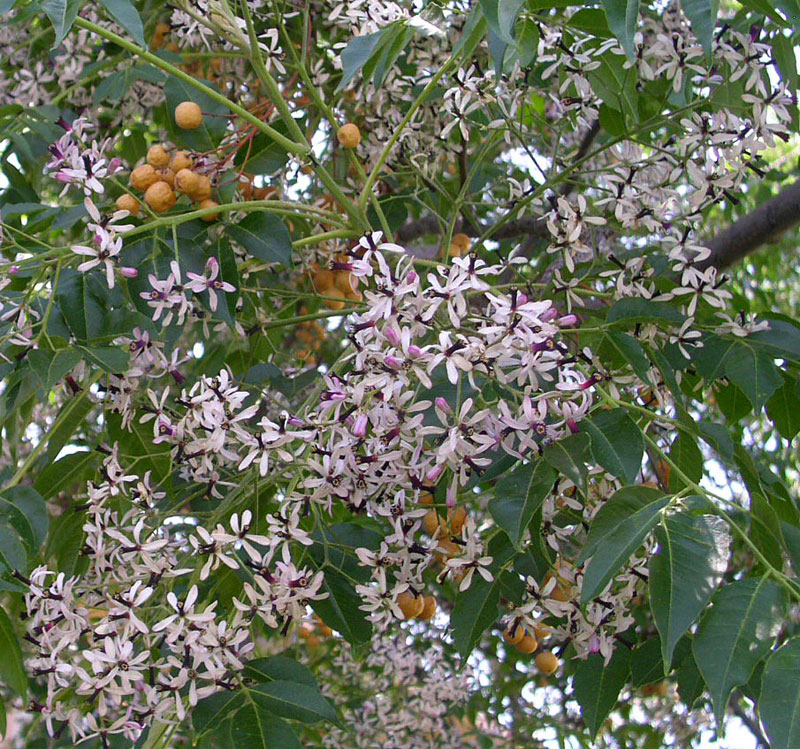
- The Seringa tree is a very well-known, large (25m), deciduous tree with smooth reddish-brown bark that becomes smothered in highly scented purple-mauve flowers in spring. The flowers are followed by clusters of green berries that turn yellow and wrinkle as they ripen.
The leaves, bark, flowers and ripe fruits are poisonous to most animals, however some birds eat the fruit.
- Originally from
- South America
- Where is it a problem?
- Throughout South Africa
- How does it spread?
- Fruits are spread by birds, other animals, water and human activities
- Why is it a problem?
- Dense copses can form quickly along watercourses and often affect water flow. Effective seed dispersal by water enables this species to invade protected areas far from the parent plant.
- Planting alternatives
- Mountain Seringa (Kirkia wilmsii), White Seringa (Kirkia acuminata), Cape Chestnut (Calodendrum capense), Pompom Tree (Dais cotinifolia), Lowveld Chestnut (Sterculia murex), Lavender Tree (Heteropyxis natalensis)
- Uses
- Ornamental tree in gardens
Please help...
Any donations would be greatly appreciated and are much needed to support these efforts. Please consider setting up a stop order with your bank for a regular monthly contribution rather than (or in addition to) a one-off donation. This would greatly assist us in budgeting and planning for the future.
Please EFT to the following account:
| Bank: | Nedbank |
| Branch name: Branch code: |
Morning Glen Branch 198 765 |
| Account Name: | Sandspruit Ullmann Park Association |
| Account Number: | 1014 852 641 |
| Reference: | Your name |
Any questions? Please contact us by clicking here.